

Audacity Capital has been around longer than many prop firms people talk about today, which is one reason traders still keep coming back to the same question: is this actually a solid prop firm, or is it just another name with clever marketing?
That is exactly what this review is here to answer.
In this Audacity Capital Review 2026, I am looking at the current setup, the challenge paths, the rules that matter, the payout structure, the platforms, the strong points, the trade-offs, and the type of trader this firm is most likely to suit. This is not a hype piece. The goal is to help you understand whether Audacity Capital is really worth considering if you trade forex and want funding.
And to be fair, Audacity Capital does have a few things going for it right now. The company currently offers three main routes: Ability Challenge, Ability One, and FTP instant funding. It is also leaning heavily into trader-friendly messaging like no consistency rule anymore, weekend holding allowed, news trading allowed with conditions, and same-day payouts upon approval. On paper, that is attractive. But paper is not the same thing as real-world fit.

Want to check Audacity Capital’s current programs for yourself?
If Audacity Capital is on your shortlist, the button below will take you to the latest program details, pricing, and rules so you can review everything for yourself.
Check Audacity CapitalWhat This Review Covers
- What Audacity Capital currently offers in 2026
- How the Ability Challenge, Ability One, and instant funding differ
- The trading rules that matter most
- What payout and profit split terms look like
- Whether the platforms and trader conditions are competitive
- The main pros, cons, and final verdict
What Audacity Capital Is And Why Traders Still Talk About It
Audacity Capital is one of the older names in the prop space, and that alone gives it a different feel from the many newer firms that seemed to appear overnight. On its homepage, the firm says it has been empowering traders since 2012 and now frames itself around a structured evaluation and simulated trading infrastructure designed to identify and develop talent.
That matters because longevity counts for something in prop trading. It does not automatically mean a firm is perfect, but it does mean the company has had to survive multiple market conditions and a very crowded industry.
The site also says more than 1 million traders from 150+ countries have started their journey with Audacity Capital. Marketing numbers always deserve a bit of caution, but they still show how the firm wants to position itself: established, global, and built for scale.
Audacity Capital’s Main Funding Paths In 2026
One of the better things about Audacity Capital right now is that it is not forcing every trader into one single model. The firm currently presents three main choices:
- Ability Challenge — the two-step evaluation path
- Ability One — the one-step challenge path
- FTP — the instant funding route
That gives traders a real choice based on personality, budget, and tolerance for evaluation rules.
| Program | Style | Best Fit | First Impression |
|---|---|---|---|
| Ability Challenge | Two-step evaluation | Traders who want a more standard challenge route | Most balanced option for many forex traders |
| Ability One | One-step evaluation | Traders who want a faster route and simpler structure | Attractive if you dislike multi-phase challenges |
| FTP Instant Funding | Direct funded-style route | Traders who want to skip evaluation | More direct, but not automatically easier |
On the homepage and funded-program pages, Audacity Capital repeatedly highlights themes like up to 90% profit share, unlimited trading period on the evaluation paths, and scaling potential up to $2 million. Those are strong selling points, but they only matter if the rules underneath still work for your trading style.
How The Ability Challenge Works
The Ability Challenge is the most obvious starting point for many traders because it looks closest to the familiar two-step prop firm model.
According to Audacity Capital’s Knowledge Center, the Ability Challenge has:
- an unlimited trading period for both phases
- a minimum of 4 trading days in phase 1 and phase 2
- a 10% profit target in challenge phase
- a 5% profit target in verification
- 7.5% daily drawdown in challenge phase
- 5% daily drawdown in verification
- 15% maximum drawdown in challenge phase
- 10% maximum drawdown in verification
There are two parts of this that stand out immediately.
First, the unlimited time is genuinely useful. Many traders perform worse when they feel pressured by a countdown clock. Removing the time limit reduces one common source of challenge panic.
Second, the drawdown allowances are not ultra-tight compared with some stricter firms. That does not mean they are loose enough to ignore, but it does mean the structure is not obviously designed to choke out every normal trader.
How The Ability One Program Compares
The Ability One route is Audacity Capital’s one-step challenge. In plain English, it is trying to appeal to traders who do not want to go through a two-phase evaluation.
Based on the current Knowledge Center page, Ability One has:
- an unlimited trading period
- a minimum of 3 trading days
- a 10% profit target
That makes it easier to understand structurally. There is one path, one target, and less mental clutter.
The big appeal here is not that one-step models are magically easier. The appeal is that they are cleaner. Some traders simply do better when the route feels more direct.
On the other hand, one-step programs are usually only attractive if the underlying rules still fit your style. So the real question is not “one-step or two-step?” The real question is “which structure gives me a better chance of staying within the rules while trading normally?”
What Instant Funding Looks Like At Audacity Capital
Audacity Capital also pushes its FTP instant funding route, which is clearly aimed at traders who do not want to spend time in a conventional evaluation.
That sounds great in theory, but instant funding models always need a little more scrutiny. They can be appealing because they skip the emotional drag of profit targets and multi-phase passing conditions, but they are only worth it if the payout logic, scaling terms, and trading rules still make sense for the cost.
Audacity’s site presents FTP as part of the same broader ecosystem, but the scaling logic differs from the evaluation routes. In the General Trading Rules guide, the firm says FTP accounts double every time you hit the profit target, while the profit split on FTP is 60% under 30 days and 50% over 30 days.
That is a meaningful detail because it makes FTP very different from the more attractive headline figures tied to the standard funded routes. So if you are considering instant funding, read the specific payout logic carefully instead of assuming the whole site uses one uniform structure.
Profit Split And Payouts: Strong Selling Point Or Just Good Marketing?
This is where Audacity Capital starts to look more interesting.
On the Ability Challenge page, the current payout structure says:
- first payout can be requested 14 days after the first trade on the live phase
- subsequent payouts can be requested bi-weekly
- profit share starts at 75%
- profit share increases to 85% if you withdraw over 10% profit within 30 days
- profit share can reach 90% after doubling the account twice and maintaining strong performance
There is also a current company-wide message around same-day payouts upon approval, while the General Rules guide says payouts from trading accounts to the dashboard wallet process within one business day upon approval, with withdrawal requests typically processed in 3 to 5 business days including review.
That is the kind of thing traders should read carefully. The marketing version sounds very fast, but the back-end review and approval process still matters. In other words, same-day after approval is not always the same as same-day from initial request.
 Payout messaging is one of Audacity Capital’s strongest hooks right now, but traders should still read the actual payout process and timing language carefully.
What The Drawdown Rules Mean In Real Trading
Drawdown rules are where a prop firm stops being a marketing brand and starts becoming a real trading environment.
Audacity Capital’s current Knowledge Center explains that the Ability Challenge and Verification stages use a static drawdown system. That is useful because static drawdown is usually easier to understand than some moving or trailing structures that confuse newer traders.
From a practical point of view, that makes the risk model feel more stable. Traders know the line they are working with instead of watching it shift in ways that feel harder to predict.
That said, “more straightforward” does not mean “easy.” A daily drawdown of 7.5% in challenge phase and 5% in verification still forces discipline, especially for traders who overleverage, stack positions, or trade news too aggressively.
News Trading, Weekend Holding, And EAs
This is one of the more trader-friendly parts of the current offer.
Audacity Capital now says weekend holding is allowed and news trading is allowed, but with one important condition: traders should avoid opening, closing, or adding to positions within 3 minutes before or after a high-impact news release or speech, because that can be flagged as excessive risk.
That is a more useful setup than the blanket no-news policies some prop firms use. It gives swing traders and higher-timeframe traders more room to trade naturally.
The site also says EAs are allowed and copy trading is allowed in upgraded form, provided the EA or setup does not break prohibited-strategy rules and is not sourced from third-party signals.
This is a big deal for some traders. Not everyone wants a prop firm that forces them into pure manual discretionary trading. So on this point, Audacity Capital looks more flexible than many firms that still feel suspicious of any structured automation.
 Audacity Capital currently supports both MT5 and DXtrade, which gives traders more choice than firms that lock everything into one environment.
Platforms: MT5 And DXtrade
Platform choice matters more than people sometimes admit. A good challenge with a platform you hate can still feel frustrating.
Audacity Capital currently offers both MT5 and DXtrade. Its platform pages position DXtrade as a more modern, fast, user-friendly environment with strong charting and flexibility, while MT5 remains the familiar default for many forex traders.
For a lot of traders, simply having both choices is a plus. It means the firm is not boxing everyone into one interface or one workflow. MT5 will probably still feel more natural to most forex-first traders, while DXtrade may appeal to people who want something a bit cleaner and more modern.
This is not the biggest reason to choose a prop firm, but it is a quality-of-life factor. And quality of life matters when you are staring at charts for hours.
Public Reviews And Trust Signals
No prop firm review is complete without looking at public sentiment, but this is also one area where you need some balance.
Recent Trustpilot snippets for Audacity Capital are currently positive, with reviewers mentioning supportive customer service, order execution, and general transparency. At the same time, Audacity Capital also has a scam-alert page warning traders about cloned websites and misleading review noise connected to fake domains or impersonation.
So what should you do with that?
The honest answer is this: public reviews can be useful for spotting patterns, but they should never replace reading the rules yourself. A prop firm can have glowing reviews and still be a bad fit for your style. On the other hand, a firm can have mixed noise around it while still offering a structure that works well for disciplined traders.
Who Audacity Capital Is Most Likely To Suit
In my view, Audacity Capital looks strongest for traders who value three things:
- a more established brand name in the prop space
- unlimited time on evaluation paths
- rules that are clearer and slightly more flexible than the most rigid prop firms
It may be especially attractive to:
- forex traders who dislike time-limited evaluations
- swing traders who need weekend holding flexibility
- news-aware traders who want some room instead of a total ban
- MT5 users who want a familiar prop environment
- traders comparing one-step vs two-step options within the same firm
The firm may be less ideal for:
- traders who only care about the cheapest challenge fee
- people who do not want to read program-specific payout logic carefully
- traders who assume “instant funding” automatically means easier money
Pros And Cons
Pros
- Established brand with a longer track record than many newer prop firms
- Ability Challenge and Ability One both offer unlimited trading periods
- Profit-share path can rise as high as 90%
- Weekend holding and news trading are allowed with conditions
- EAs and copy trading are allowed within policy limits
- MT5 and DXtrade platform choice is a real plus
- Rules are explained more clearly than many firms manage
Cons
- The payout language needs careful reading because “same-day after approval” is not the same as instant from request
- Different programs have very different economics, especially FTP
- There is still enough rule detail that lazy traders can trip themselves up
- The marketing can sound simpler than the actual path really is
- Not every trader will like the specific payout progression logic
Is Audacity Capital Better Than The Average Prop Firm?
I would say it is better than average in a few key areas, yes.
The biggest ones are:
- it feels more established than the flood of newer firms
- the unlimited time structure on evaluation paths is genuinely useful
- the company appears to be moving toward more trader-friendly rule flexibility
- it offers multiple program styles under one roof
Where it becomes less straightforward is when you get deeper into the specific terms of each route. The headlines are attractive, but the details still matter a lot. Traders who read only the banner promises may come away with the wrong expectations.
So the best way to think about Audacity Capital is not “easy prop firm” or “hard prop firm.” It is better to think of it as a firm that offers some genuinely solid conditions, but still expects you to understand what you are signing up for.
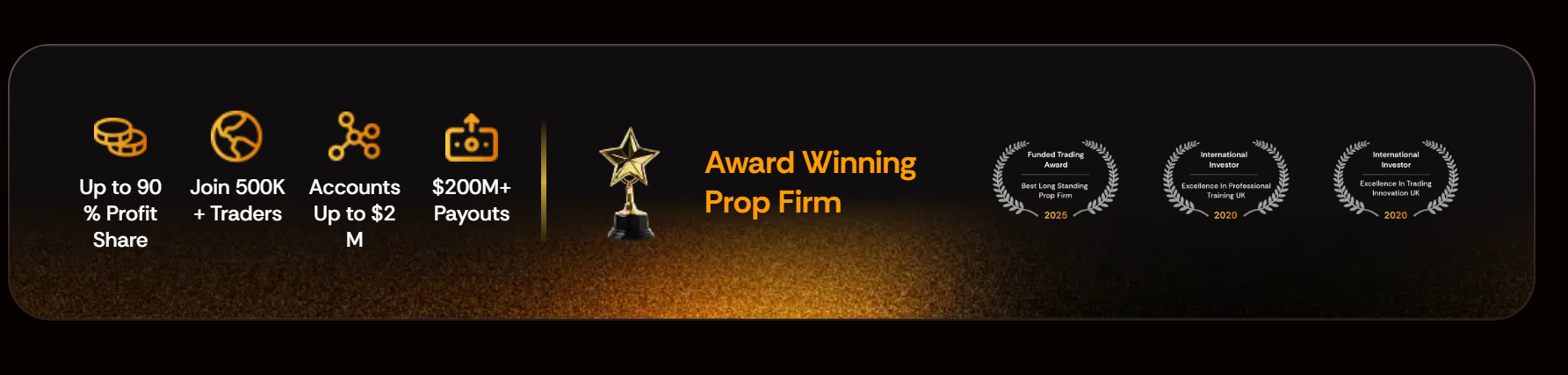 Audacity Capital leans heavily into its long-standing brand and award messaging. The more important question for traders is whether the rules and payouts fit their actual style.
My Final Verdict
So, is Audacity Capital worth it for forex traders in 2026?
Overall, I would say yes, for the right trader.
Audacity Capital is not interesting because it has the loudest marketing. It is interesting because the current 2026 setup actually includes a few things many forex traders care about: unlimited time on the evaluation paths, flexible holding rules, EA support within reason, multiple platform choices, and a profit-sharing structure that can become attractive over time.
The biggest caution is that you should not treat all programs as if they are the same. Ability Challenge, Ability One, and FTP each have their own logic. That matters a lot.
If you are a disciplined trader who values flexibility more than hype, Audacity Capital is genuinely worth shortlisting. If you are the kind of trader who skips the details and assumes the most marketing-heavy line tells the full story, you will probably misunderstand the offer.
My honest take is that Audacity Capital feels stronger now than it did when it relied more on older prop-firm branding alone. The current version is more competitive. It just still needs to be read carefully.
Frequently Asked Questions
Is Audacity Capital legit?
Audacity Capital presents itself as operating since 2012 and remains one of the older names in the prop space. That does not mean you should skip the rules, but it does give the firm more history than many newer competitors.
Does Audacity Capital allow weekend holding?
Yes. Audacity Capital currently says weekend holding is allowed.
Does Audacity Capital allow news trading?
Yes, but with restrictions. The current rules say traders should avoid opening, closing, or adding to positions within 3 minutes before or after a high-impact news release or speech.
What platforms does Audacity Capital offer?
Audacity Capital currently offers MT5 and DXtrade.
What is the Audacity Capital profit split?
On the Ability Challenge funded path, profit share starts at 75%, can rise to 85% based on performance thresholds, and can eventually reach 90% under the scaling plan. FTP uses a different structure, so read that route separately.
Are payouts really same day?
Audacity Capital currently markets same-day payouts upon approval, but its rules and help content also make clear that requests still go through review and approval steps first.
Resources
- Audacity Capital homepage
- Funded trader programs overview
- Ability Challenge guide
- Ability One guide
- Trading guidelines for funded traders
- General rules guide
- Trading platforms overview
- DXtrade platform page
- How to choose the right prop trading company
- Drawdown in prop trading guide
- Audacity Capital Trustpilot profile