



If you are based in Malaysia and you have been looking at FTMO, the biggest question is usually very simple: can Malaysian traders actually join, trade, and get paid without running into problems later?
The short answer is yes. Malaysian traders can join FTMO in 2026. Malaysia is not listed among FTMO’s restricted countries, and that matters because eligibility is one of the first things serious traders should check before paying for any challenge.
But that is only the starting point. The better question is this: is FTMO practical for traders in Malaysia once you factor in rules, payouts, platforms, and day-to-day trading reality?
That is what this guide is about. Not hype. Not recycled prop firm talk. Just a practical breakdown for traders in Malaysia who want to know whether FTMO is a real option in 2026 and how to approach it in a way that actually makes sense.

Want to check FTMO for yourself before reading the full guide?
If you are already considering an FTMO challenge, this is the quickest way to view the current FTMO offer and get started from the official trader portal.
Go to FTMO Read Our FTMO Review FirstWhat This Guide Covers
- Can traders in Malaysia join FTMO in 2026?
- Why FTMO appeals to many Malaysian traders
- How FTMO works in plain English
- The FTMO rules Malaysian traders need to respect
- Which FTMO platform makes the most sense in Malaysia
- Payments, withdrawals, and what Malaysians should expect
- The time-zone issue many Malaysian traders overlook
- Is FTMO worth it for Malaysian traders in 2026?
- Frequently asked questions
Can traders in Malaysia join FTMO in 2026?
Yes, traders in Malaysia can join FTMO in 2026.
The cleanest way to answer this is to start with FTMO’s own eligibility page. FTMO says there are restrictions for persons from Iran, Syria, Myanmar, and North Korea, as well as certain sanctioned or disqualified individuals. Malaysia is not on that list.
That means a trader based in Kuala Lumpur, Johor Bahru, Penang, Kota Kinabalu, or anywhere else in Malaysia is not automatically blocked just because of location. In practical terms, Malaysia falls into the broad group of countries FTMO serves.
In fact, FTMO says it serves 140+ countries, and that strongly supports the idea that Malaysian participation is part of FTMO’s normal customer base.
For traders who want to see a real Malaysia-based perspective, there is also this YouTube video from a Malaysian trader using FTMO, which adds a more local angle beyond the usual generic prop firm talk.
That distinction matters. A lot of people ask “Can I join?” when what they really should be asking is “Can I trade this model properly without blowing the account on avoidable mistakes?”
Why FTMO appeals to many Malaysian traders
FTMO tends to attract traders in Malaysia for a few practical reasons.
It gives access to larger simulated capital
FTMO offers challenge sizes from $10,000 to $200,000. For many traders, that is appealing because it creates a path to trade a larger account than they would comfortably fund from personal savings.
It is globally recognized
In prop trading, reputation matters. FTMO is one of the best-known names in the space, and it says it has served 3.5M+ customers worldwide and paid out $500M+ in rewards worldwide. That does not mean every trader succeeds, of course, but it does tell you this is not some tiny unknown operation.
It offers multiple platform options
FTMO offers MT4, MT5, cTrader, and DXtrade. That flexibility matters for Malaysian traders because platform preference is rarely a small detail. Some traders want MT5 for broader functionality, some want cTrader for cleaner execution and interface, and others simply prefer the setup they already know.
The payout structure is clear
FTMO says traders on the 1-Step product are entitled to 90% of simulated profits, while traders who qualify through the 2-Step product are entitled to 80%, with a move to 90% possible through the scaling plan. That kind of clarity matters when you are trying to decide whether the challenge model is worth the effort.
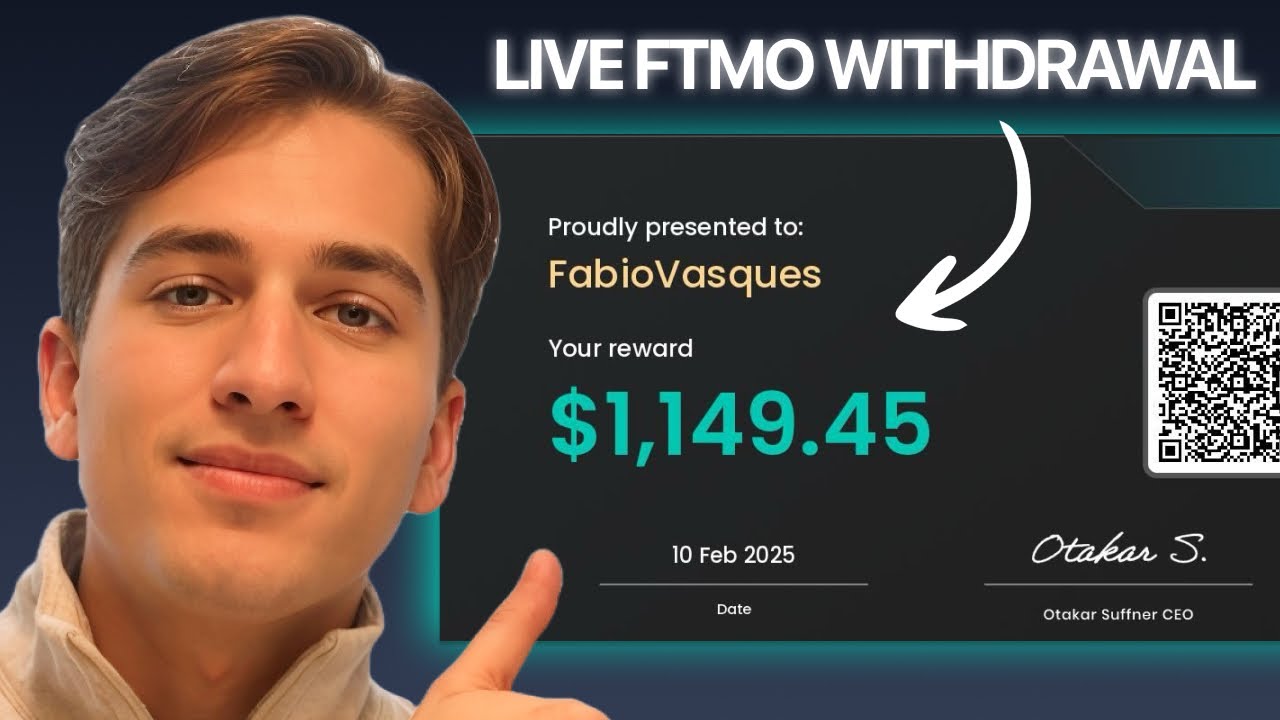 A lot of traders in Malaysia are not just asking whether FTMO is available. They want to know whether the payout model is realistic enough to make the challenge worth attempting.
How FTMO works in plain English
If you are new to FTMO, here is the simple version.
FTMO currently offers both a 1-Step and 2-Step challenge structure.
The 2-Step model
This is the version many traders still think of first. You start with the FTMO Challenge, then move to Verification if you pass. On the 2-Step path, FTMO says the first phase aims for a 10% profit target, and the second phase lowers that target to 5%, while risk limits still need to be respected.
The 1-Step model
FTMO also has a 1-Step version, which removes the second phase. It is simpler in structure, but that does not mean easier in practice. It still requires consistency and risk control.
One detail many people miss is that the fee treatment differs between products. FTMO says the 1-Step entry fee is not refunded after successfully completing the evaluation, while the 2-Step fee may be refunded with the first reward.
If you want a more detailed breakdown of rules, pros, and cons, our full FTMO review covers the broader picture in more detail.
The FTMO rules Malaysian traders need to respect
This is the section that matters most.
Traders do not usually fail FTMO because they lacked a magical entry strategy. Many fail because they underestimate the risk rules, or they break them during a moment of impatience.
Maximum Daily Loss
On the classic 2-Step product, FTMO’s Trading Objectives say the Maximum Daily Loss is 5% of the initial balance. On a $100,000 account, that means $5,000.
This is not only about closed trades. FTMO explains that floating loss on open positions is also included, alongside commissions and swaps. That is where many traders get caught.
Maximum Loss
On the same 2-Step structure, FTMO uses a maximum overall loss limit of 10%. Again, on a $100,000 account, that means $10,000. If you hit that, the challenge is done.
Profit targets are only part of the story
A lot of newer traders obsess over the profit target and barely think about the drawdown rules. That is backwards. The profit target is the visible part. The loss rules are what actually eliminate undisciplined traders.
This is one reason structured systems tend to do better in challenge environments. If your approach already has defined entries, clear stop placement, and controlled risk, you have a much better shot of surviving the rules.
That is also why many traders prefer challenge-friendly systems instead of random discretionary entries. For example, our Precision Breakout EA is built around a more disciplined breakout framework, which is much closer to what challenge trading usually demands than emotional overtrading.
 Automation does not remove risk, but disciplined systems can help reduce the kind of impulsive trading that ruins a challenge account.
Which FTMO platform makes the most sense in Malaysia
There is no single perfect answer here. The best platform depends on how you trade.
| Platform | Best for | Malaysia angle |
|---|---|---|
| MT4 | Traders who want familiarity and simple EA workflows | Still popular, but some traders now prefer newer tools |
| MT5 | More modern workflow, broader functionality, many EAs | Great fit for traders using newer automation setups |
| cTrader | Manual traders and those who like a cleaner interface | Good option if you value usability and depth |
| DXtrade | Web-based simplicity | Useful for traders who do not want a heavy desktop setup |
If you are still comparing them, our guide on FTMO global platforms: MT4 vs MT5 vs cTrader vs DXtrade goes deeper into the differences.
For many traders in Malaysia, MT5 is the practical sweet spot. It works well for discretionary trading, but it also fits traders who want to use automation more seriously.
If your style is breakout-based or you are trying to build a more repeatable challenge process, MT5 can be especially useful. The same goes for traders focused on gold systems such as the Smart Gold Martingale EA for MT5, though challenge traders should always be extra careful with risk when using any layered system.
Payments, withdrawals, and what Malaysians should expect
One of the most practical questions in Malaysia is this: how do you pay for the challenge, and how do you receive withdrawals later if you pass?
Challenge payment methods
FTMO says challenge payments can be made via bank wire transfer, debit or credit card, cryptocurrencies, or Skrill.
FTMO also notes that bank transfers are unavailable for a small list of countries due to regulation, and Malaysia is not on that list. So from the official information available, Malaysians are not singled out for payment restriction on that point.
Reward withdrawals
For withdrawals, FTMO says rewards are processed within 1 to 2 business days after the invoice is confirmed. It also says rewards can be paid through bank wire transfer, Visa Direct or Mastercard Send up to $20,000, Skrill, or cryptocurrencies.
For traders in Malaysia, that gives a decent amount of flexibility. Some will prefer a direct banking route. Others may be more comfortable with crypto or Skrill depending on convenience, fees, and personal preference.
What about taxes?
This is the part where you should not rely on prop firm marketing or random comments in a Telegram group.
Tax treatment depends on your own situation in Malaysia, how your trading activity is classified, and how your withdrawals are received and recorded. It is better to treat this as a local tax and compliance question rather than assume another trader’s experience will automatically apply to you.
The time-zone issue many Malaysian traders overlook
This is one of the most important practical details for traders in Malaysia, and it gets ignored far too often.
FTMO says Maximum Daily Loss is monitored in Prague time and resets at midnight CE(S)T. That means the reset does not happen at your local midnight in Malaysia.
Since Malaysia runs on UTC+8 and Prague runs on CET or CEST depending on the time of year, the reset usually lands around 6:00 AM or 7:00 AM Malaysia time. That is an inference from the time-zone offsets, and it matters a lot if you hold trades overnight.
If you trade London open, New York session, or hold positions overnight from Malaysia, you need to know exactly when FTMO’s daily reset happens for your account. Treat that as part of your risk plan, not as an afterthought.
This matters even more for traders who like gold or session breakouts, because those strategies often become active around time windows that overlap with FTMO’s monitoring logic in non-obvious ways.
 For traders in Malaysia, time-zone awareness is not a small detail. It can be the difference between staying within the rules and failing a challenge you were actually trading well.
What Malaysian traders should do before buying an FTMO challenge
Start with the free trial if you are unsure
FTMO offers a free trial, and honestly, that is one of the best places to begin if you have not traded their model before. It is much better to discover your weak points on a free environment than on a paid challenge.
Pick a size you can actually manage
There is no prize for choosing a challenge size that causes you to panic every time a position moves against you. The best account size is the one you can trade with discipline.
Know your actual strategy before you pay
Do not buy first and then go looking for a strategy on YouTube the same evening. That is how people donate challenge fees.
If your style is breakout-oriented and rule-based, build that process first. If you need something challenge-focused and structured, our Precision Breakout EA is one of the tools worth reviewing as part of a more disciplined setup.
Follow FTMO updates
Rules, platforms, and operational details can change. If you are trading FTMO seriously from Malaysia, stay current. Our FTMO February 2026 updates page is a good place to keep track of changes that may affect your decisions.
Is FTMO worth it for Malaysian traders in 2026?
In my view, yes, FTMO is still worth considering for traders in Malaysia in 2026. But only for the right kind of trader.
If you are disciplined, patient, and comfortable following clear rules, FTMO can be a strong opportunity. The brand is established, access from Malaysia appears open, payout options are clear, platform choice is solid, and the challenge structure is transparent enough that you know what you are signing up for.
But if you are still highly emotional in your trading, if you keep moving stop losses, or if you think prop challenges are mainly about chasing big wins quickly, FTMO can become expensive tuition.
That is the honest answer.
For some traders in Malaysia, FTMO will be a real path forward. For others, it will expose weaknesses they still need to fix. Either way, it is better to go in with a clear plan than with pure excitement.
Ready to check FTMO or compare it with your current setup?
Go straight to FTMO if you already know what you want, or review the platform comparison and rule breakdown first if you are still weighing your options.
Visit FTMO Compare FTMO Platforms For Malaysian traders, success with FTMO usually comes down to structure, risk control, and understanding the rules better than the average challenge buyer.
Frequently Asked Questions
Can Malaysians use FTMO in 2026?
Yes. Based on FTMO’s official eligibility information, Malaysia is not listed among the restricted countries, so Malaysian traders can join.
Does FTMO support withdrawals for traders in Malaysia?
FTMO says rewards can be withdrawn through bank wire transfer, Visa Direct or Mastercard Send up to certain limits, Skrill, or cryptocurrencies. Malaysians should choose the method that best fits fees and convenience.
Is FTMO legal in Malaysia?
The practical point is that FTMO appears open to Malaysian traders. For local legal, tax, and compliance questions, it is better to review your own situation carefully rather than rely on forum comments.
What is the best FTMO platform for traders in Malaysia?
It depends on your style. MT5 is often a strong all-round choice, cTrader is great for many manual traders, and DXtrade suits traders who want a simpler web-based workflow.
What is the biggest FTMO mistake Malaysian traders make?
Many underestimate the risk rules, especially Maximum Daily Loss and the time-zone reset issue. That is where a lot of challenge accounts get lost.
Should I start with FTMO 1-Step or 2-Step?
That depends on your preferences. The 1-Step model is simpler in structure, while the 2-Step path may appeal to traders who prefer the traditional FTMO flow and fee-refund possibility with the first reward.
Resources
- FTMO official eligibility page
- How FTMO works
- FTMO Trading Objectives
- FTMO payment methods
- FTMO reward withdrawals
- FTMO trading platforms
- FTMO scaling plan