
Last verified: August 28, 2025 · Built for 2026 searches
MT5 on FTMO US — what’s different (at a glance)
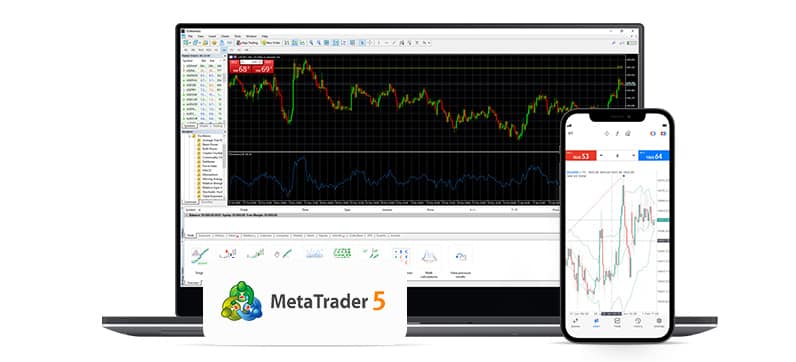
- One position per symbol: new fills merge into a single position with a dynamic average price.
- One SL/TP per net position: manage risk with a single protective stop and a single profit target.
- FIFO exits: reductions apply to oldest fills first—design partials accordingly.
- No hedging: you cannot hold long and short on the same symbol simultaneously.
Core risk limits: MDL and ML (and how to stay under them)
Maximum Daily Loss (MDL) = 5% of starting balance; Maximum Loss (ML) = 10% of starting balance. Example on a $100,000 simulation: MDL = $5,000, ML = $10,000.
Convert limits into a daily risk budget
Pick a fixed fraction of MDL as your daily trading risk (DTR). Many disciplined traders use 40–60% of MDL so a poor day doesn’t end the run.
| Account | MDL (5%) | DTR at 50% of MDL | Max trades at 0.5% risk ea. |
|---|---|---|---|
| $50,000 | $2,500 | $1,250 | ~5 trades/day |
| $100,000 | $5,000 | $2,500 | ~5 trades/day |
| $200,000 | $10,000 | $5,000 | ~5 trades/day |
Risk per trade = DTR ÷ planned number of attempts. If you plan up to five attempts, a $2,500 DTR gives $500 risk per attempt (0.5% of $100k).
Position sizing formula (simple)
Position size (lots) = (Account × Risk% per trade) ÷ (Stop (points) × Value per point per lot)
Example: $100k, risk 0.5% ($500), 25-point stop on US100, value/lot/point = $1 → size = 500 ÷ (25×1) = 20 lots (illustrative; check actual contract specs).
Clean order management: pending orders, brackets, and FIFO
Always use a bracket
- Attach a stop-loss (SL) and take-profit (TP) to your entry before sending—or immediately after fill.
- Keep SL/TP aligned to the net position. If you add size, adjust the single SL/TP.
Use pending orders to avoid accidental hedging
- New market orders in the opposite direction flip/offset the same net position—this isn’t hedging, it closes/rotates exposure. Don’t rely on it to manage risk.
- Stage stop or limit orders for planned adds or reversals; confirm volumes and expected net exposure before sending.
FIFO-friendly partials
- Close with volume-based reductions (e.g., close 25% of the net position), not ticket-based closures.
- When scaling out, keep SL where it protects the remaining exposure; move to breakeven only after your plan justifies it.
Scaling in and out (without breaking your risk math)
Two-step add model
- Start with half-size. If price confirms (e.g., breaks structure in your direction), add the second half.
- Recalc net average price and update the one SL so total risk ≤ your per-trade cap.
Illustration on $100k, risk $500: enter 10 lots at 100.00 with SL 99.50 (50 pts). If you add 10 lots at 100.20, your average is ~100.10; move SL to 99.60 (50 pts from avg) so risk remains ~$500.
Scaling out hierarchy
- First partial near 1R to lower psychological pressure and protect MDL.
- Second partial around key HTF level; trail the rest with structure or ATR.
- Never widen SL to “save” a trade—your MDL exists to prevent exactly that.
Common violations & fixes
| Mistake | Why it’s a problem | Fix |
|---|---|---|
| Opening an opposite order to “hedge” | Netting merges/offsets; hedging is not allowed | Flatten first, then reverse; or place a stop entry beyond your invalidation |
| Setting multiple SL/TP for separate adds | Only one SL/TP per net position | Maintain a single protective SL/TP sized for the full net exposure |
| Ignoring FIFO in partial exits | Oldest fills close first—ticket-based logic breaks | Use volume-based closes (% of net) and plan partials ahead |
| Oversizing during news | Volatility + slippage can blow through MDL quickly | Halve size (or stand aside) unless your strategy is built for news |
| Forgetting contract expiries/maintenance | Close-only periods and expiries can auto-close or reject orders | Check instrument hours and weekly maintenance before each session |
News & rollover discipline
- Map your calendar: FOMC, CPI, NFP, central banks, PMI, earnings for index proxies.
- Size rules: cap per-trade risk at half normal on high-impact releases unless you’re a news specialist.
- Rollover hour: spreads can widen; avoid tight SLs or new scalps into the switch.
- Weekend maintenance: don’t leave fragile orders live; set alerts instead.
Pre-trade, intraday, and post-trade checklists
Pre-trade
- Account size, MDL/ML computed; DTR set (e.g., 50% of MDL).
- News/maintenance checked; symbol hours verified.
- Plan written: thesis, invalidation, entries, adds, partials, exit conditions.
Intraday
- Orders sent with SL/TP; confirm net exposure and average price after any add.
- If first two attempts fail, reduce size or stop for the day to protect DTR.
- Record slippage & spread at key times (open, overlap, rollover).
Post-trade
- Tag outcomes (setup type, session, news/no-news, liquidity conditions).
- Review if any decision risked MDL; adjust rules to prevent repeats.
- Archive screenshots; update a weekly summary of R, hit rate, and variance.
FAQs — MT5 Risk Controls for FTMO US
Does FTMO US allow hedging?
No. MT5 on FTMO US is netting + FIFO, so you can’t hold long and short on the same symbol at the same time.
How do I manage several adds with one SL?
Recalculate the net average price after each add and move a single SL to maintain your per-trade risk cap.
What risk per trade is sensible?
Common ranges are 0.25–0.6% of account. Anchor it to your DTR (e.g., five attempts per day at 0.5% each when DTR is 2.5%).
How can I avoid FIFO surprises?
Use volume-based reductions (percent of net), not ticket-targeted closes. Design partials ahead of time.
Do I need a VPS?
Use one if you run EAs, scalp overlaps, or travel. Place it close to broker servers; re-benchmark ping and slippage after setup.
What minimum trading days should I plan for?
Plan at least the required minimum (often four) with meaningful but controlled risk. Don’t churn tiny trades—trade your plan.
Official resources
- FTMO US vs Global — execution & rules
- How it Works — MDL/ML, profit targets, examples
- Forbidden trading practices
- Trading Updates — maintenance & holidays
- Simulated Assets — instrument specs & hours
FTMO US provides a simulated trading environment and educational tools. Rewards are based on simulated profits as described by FTMO US. Trading involves risk.